Wrapped with Feelings Typography Art: Bridging Emotion and Design
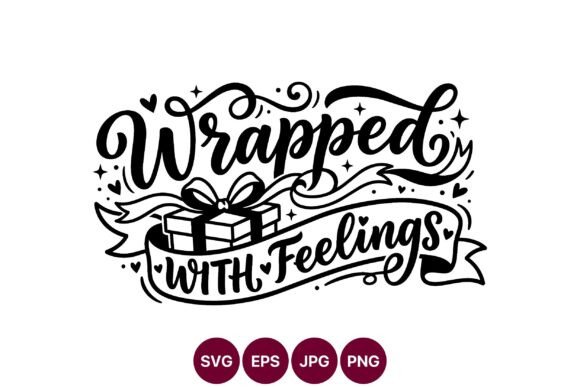
In an era where digital communication often feels transient and impersonal, the demand for visual elements that convey genuine warmth has never been higher. Wrapped with Feelings Typography Art emerges as a compelling solution to this modern disconnect. This specific style of design merges the structural precision of vector graphics with the organic, human touch of hand-drawn lettering. By combining black and white aesthetics with symbolic imagery—such as gift boxes, bows, hearts, swirls, and stars—this art form creates a visual language that speaks directly to the emotional core of the viewer.
For creators, marketers, and business owners, understanding the utility of such assets is crucial. It is not merely about decoration; it is about establishing a connection. The high-contrast nature of black and white lettering ensures clarity and impact, while the decorative elements soften the message, making it approachable and memorable. As we navigate a landscape saturated with generic stock imagery, the authenticity offered by hand-drawn styles provides a distinct competitive advantage.
The Evolution of Emotional Design in Digital Media
The shift toward emotionally resonant design is not a fleeting trend but a response to changing user expectations. Early web design prioritized function over form, often resulting in sterile interfaces. Today, however, audiences crave personality. They seek brands and content that feel human. This is where Hand drawn black and white lettering plays a pivotal role. Unlike rigid, computer-generated fonts, hand-drawn typography carries the subtle imperfections and variations that signal human creation. These nuances trigger a psychological response of trust and familiarity.
Furthermore, the integration of symbolic elements like a gift box wrapped with bow and hearts transforms simple text into a narrative. It illustrates feelings and emotions in a decorative typography style that goes beyond mere readability. For educators and bloggers, this means turning abstract concepts into tangible visuals. For entrepreneurs, it means packaging their value proposition in a way that feels like a gift rather than a transaction. The evolution of this art form reflects a broader market preference for authenticity over polish, and connection over conversion.
Technical Versatility and Modern Workflows
One of the most significant barriers to adopting custom artwork has traditionally been technical limitation. Many hand-drawn assets are provided only as raster images (like JPEGs or PNGs), which lose quality when scaled. However, the modern creative workflow demands flexibility. This is why the availability of vector format files is non-negotiable for professional use. A vector file uses mathematical paths rather than pixels, allowing the artwork to be resized from a tiny social media icon to a massive billboard without any loss of sharpness.
The standard download package for high-quality typography art now typically includes a ZIP folder containing multiple file formats: SVG, PNG, JPG, and EPS. Each serves a specific purpose in a designer’s toolkit:
- SVG (Scalable Vector Graphics): Ideal for web use, ensuring fast loading times and crisp display on all devices, including high-resolution retina screens.
- EPS (Encapsulated PostScript): The industry standard for print professionals, allowing for easy editing in software like Adobe Illustrator.
- PNG (Portable Network Graphics): Perfect for digital overlays where transparency is needed, such as placing the typography over a colored background or photograph.
- JPG (Joint Photographic Experts Group): Suitable for quick previews or platforms that do not support transparent backgrounds.
Having access to 100 vector SVG EPS files ensures that users can achieve sharp results at any size. This versatility supports a wide range of applications, from small-scale hobbyist projects to large-scale commercial campaigns. It removes the friction between inspiration and execution, allowing creators to focus on the message rather than the technical constraints.
Practical Applications for Creators and Businesses
The practical implications of using Wrapped with Feelings Typography Art are vast. For marketers, these assets can enhance email campaigns, making them feel more personal and less automated. A newsletter header featuring hand-drawn lettering with swirls and stars can increase open rates by signaling that the content inside is curated with care. Similarly, social media managers can use these graphics to break up text-heavy posts, adding visual interest that encourages engagement.
For small business owners and entrepreneurs, this type of artwork is invaluable for branding. It can be used on packaging, business cards, and website banners to establish a brand voice that is warm and inviting. Consider a boutique gift shop using a vector illustration of a gift box with a bow as part of its logo. This immediately communicates the nature of the business while evoking the joy of giving. The high-contrast black and white palette ensures that the logo remains legible and striking, regardless of the background color used on different marketing materials.
Educators and coaches can also benefit significantly. When creating worksheets, presentations, or online course materials, incorporating decorative typography helps to reduce cognitive load. The visual cues provided by hearts and stars can highlight key points or celebrate achievements, making the learning experience more engaging and less daunting. The ability to scale these vectors means that the same asset can be used in a digital slide deck and a printed workbook without needing to source separate images.
Navigating the Balance Between Aesthetics and Function
While the aesthetic appeal of hand-drawn lettering is undeniable, it is essential to maintain a balance with functionality. The high-contrast nature of black and white design is advantageous here, as it ensures readability. However, designers must be mindful of clutter. The decorative elements—swirls, stars, and bows—should complement the text, not overwhelm it. The goal is to illustrate feelings and emotions, not to distract from the core message.
When selecting typography art, consider the context in which it will be used. For formal business communications, a cleaner, more restrained style may be appropriate. For lifestyle blogs or creative portfolios, a more whimsical approach with abundant decorative elements might be better suited. The key is consistency. Using a cohesive set of vector assets across all platforms helps to build a recognizable and trustworthy brand identity.
Moreover, the ease of editing vector files allows for customization. Users can adjust colors, though the classic black and white scheme often holds the most timeless appeal. They can also rearrange elements to fit specific layout requirements. This level of control empowers non-designers to create professional-looking materials without needing advanced graphic design skills. It democratizes access to high-quality visual communication tools.
Future-Proofing Your Creative Assets
As technology continues to advance, the importance of scalable, versatile assets will only grow. With the rise of diverse screen sizes and resolutions, from smartwatches to 4K monitors, raster images are becoming increasingly obsolete for primary design elements. Vector graphics future-proof your creative investments. By downloading a comprehensive ZIP folder with SVG, PNG, JPG, and EPS files, you ensure that your artwork remains relevant and usable regardless of technological shifts.
Additionally, the trend toward personalized and emotionally intelligent design is expected to deepen. Consumers are becoming more discerning, able to distinguish between generic, AI-generated content and authentic, human-centric design. Investing in high-quality, hand-drawn typography art signals a commitment to quality and authenticity. It shows that you value the recipient’s experience enough to choose visuals that resonate on an emotional level.
In conclusion, Wrapped with Feelings Typography Art is more than just a design trend; it is a strategic tool for effective communication. By combining the warmth of hand-drawn lettering with the precision of vector technology, it offers a unique blend of emotion and functionality. Whether you are a marketer looking to engage your audience, a business owner aiming to strengthen your brand, or a creator seeking to express yourself, this art form provides the versatility and impact needed to stand out in a crowded digital landscape. Embrace the power of visual storytelling, and let your designs speak not just to the eyes, but to the heart.